A book birthday, a heat wave boundary and an ode to Sir Michael Palin
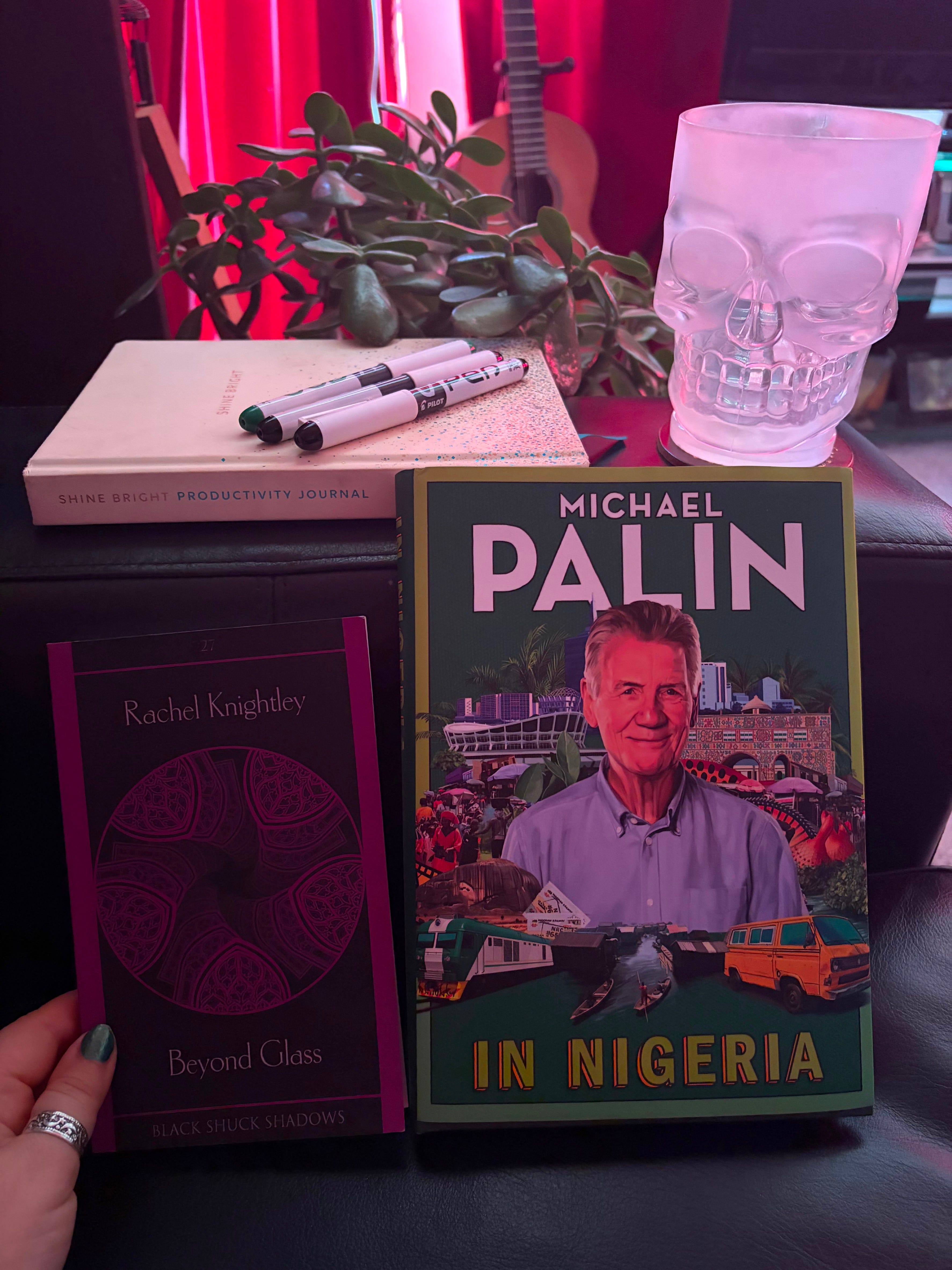
Feel free to suggest alternatives, but if I had to show the aliens the best of humanity I think I’d start by exhibiting Michael Palin.
You would say that, you might say. You’re a creative confidence coach. You work with jigsaw careers. You help people develop professional and personal happiness through unearthing all the interests currently on their page/in their world, and those yet to be part of the picture. Michael Palin (you might say) personifies the value of a jigsaw career. Acting, writing, presenting and traveling the world (with a predilection for its most difficult bits) aren’t obvious links for every person who does any one of those things, any more than having clients who range in age from six to eighty is normal for every coach. It’s about knowing who you are and not thinking you have to choose between the aspects of your identity, but celebrating the entirety.
Well, yes.
But, more importantly, no.
It’s the ‘nice’ thing.
Or, rather, it’s the misunderstandings about niceness and what niceness (when there’s clarity beneath it) allows him to create.
In case you don’t know (though you almost inevitably do), the first thing people say about Michael Palin isn’t the BAFTA or the knighthood; it isn’t even Monty Python’s Flying Circus or Around the World in Eighty Days. It’s how nice he is.
But here’s the thing about ‘nice’. There’s what it is – and then there’s what it really is.
Why I would make Michael Palin ambassador for my species is I believe his niceness is the antithesis of the ‘I don’t mind, it doesn’t matter’ pseudo-niceness, the one that leaves us waiting politely for the world to guess what we need and want. The one that leaves us living in the gap between who we are inside and who we want to be in the world.
As I think about Michael Palin and the life lesson he’s been to me, I’m reminded of what was told to me as an anecdote but lives in me as a cautionary tale. A former teacher who was a massive role model to me had a number of catchphrases she’d inherited from her own adults, one of which was ‘I want don’t get’. Years after I’d left school and was studying for my PhD, she shared with me that when her father found out she would have liked to do more further study herself, he asked why she hadn’t said anything. Her answer – which she even didn’t say aloud to him then – was because that phrase was his phrase and she’d believed it.
Gratitude is not the opposite of vision. It’s not the opposite of ambition. For ourselves, or for the change we can make in our world. But our minds can make assumptions that keep us small; keep us waiting for something that doesn’t know we’re there. Or, that doesn’t exist until we initiate it and make it exist.
Putting together a jigsaw career doesn’t come from the kind the pseudo-nice of waiting to be summoned, or doing what we’ve internalised we ‘should’ do and not looking at the distant, still-vague horizons of our possibilities. Michael Palin’s niceness is not that of waiting politely on life’s corner but of moving through its water. His awareness of what’s around him, his appreciation of people, places, art and life is not instead of being the engine, seeing what you want to create and putting your strength behind creating it, but because of it.
Last Monday evening I saw Palin speak at a private venue in London. One of the things he talked about was the greatly-beloved Knights who say Ni scene from Monty Python and the Holy Grail: how physically uncomfortable filming was; how convinced he was – as his woolly armour stuck to him in the unpleasant weather and got heavier with every take – that it wouldn’t be worth it. It wouldn’t be funny.
Even as he spoke of it he instinctively did the voice of ‘Ni’, and while no one in the audience joined in you could feel us all doing so in our heads. There is so much love for that scene and concept. But the point in telling the story was he really thought it wasn’t going to be funny. Not worth the discomfort. He was laughing at himself when he told the story, but it brought up a question for me which I asked at the end. He’d pushed back on the Knights Who Say Ni because of personal discomfort first and thinking it wasn’t funny second. And he’d been wrong. But what about when he’d been right? What happens in writing partnerships when you see something really is going the wrong way? Where’s the line between peace and politeness on one side, and the right thing for the work on the other?
As I expected, he didn’t really answer directly – although he was (unsurprisingly) lovely in talking about it. I don’t think this was conscious avoidance; I think this is one we genuinely don’t know until we’re in the moment. Because even when you have been nice for a living, including through the most difficult bits of the world, it doesn’t mean you’re a pushover. ‘I don’t mind’ doesn’t create art, or life. Having a sense of what we want to create does. Being nice is how to work with and appreciate people as we consistently do the work of creating the art, work and life we want. That’s the real power of nice.
Another thing Palin mentioned on Monday that is great jigsaw-career advice: he was the fifth person to be asked to do Around The World in Eighty Days. Even now as second in the queue behind Attenborough as national treasure of travel, it’s important to remember that (also like Attenborough) there was no God-given decree. Just as Attenborough only ended up in front of the Zoo Quest camera when someone was ill, we do not know what our current circumstances could be Chapter One of, but creative confidence means asking ourselves how, not if, we take those circumstances forward.
My first short story collection, Beyond Glass, will be five years old this Wednesday 27 May. I’m running a daily Instagram giveaway in the UK with online options if you’re outside the UK. Join in here.
Kindness has often been described as niceness with boundaries, and niceness as kindness without boundaries. Being kind to the work we’re creating means setting those boundaries, knowing our values and our direction of travel. It means creating a map of a land that isn’t only uncharted but doesn’t even exist yet, and won’t until we commit to creating it.
Boundaries around our time (for being not at work in some of our cases; for showing up for our writing in others) actually gets better results for our friends and family, clients and colleagues not to mention ourselves, than having no boundaries at all – which leaves us unfulfilled, tired and permanently in the waiting room for work to call us in. The things Palin has said no to as much as the things he’s said yes to are how he gets to do what’s most important to be done.
That’s what I want the aliens to know. What we do is important. But how we do it, and how wholeheartedly we choose what we do and (see photo of me in the heatwave) don’tdo, can be more important still.
Think on the Page…
- If there’s a phrase you’ve inherited, what is it? Whose voice do you hear it in?
- In what ways do you agree, and disagree, with that phrase now?
- How do your circumstances or values differ from the person who said it?
- If that phrase weren’t true anymore, what words could be true instead?
InkCouragement is the newsletter of Rachel Knightley Coaching and The Writers’ Gym podcast and membership, online and in London.